

This is for children who need to learn Japanese as a second language.
Children from different backgrounds can learn Japanese used daily at schools in Japan, with Scenario Videos (シナリオ動画) and Vocabulary Videos (語彙動画).
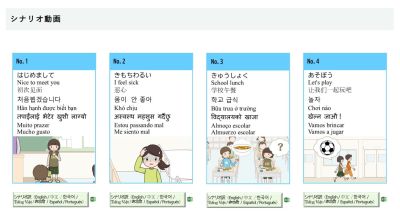
- There are 24 Scenario Videos (シナリオ動画).Children can learn Japanese with Sapotan and Hirorin, who are from foreign backgrounds, by watching them experience life at a Japanese elementary school in an anime story. They can learn by watching short scenes over and over again, while they think about what the words mean.
- In the Vocabulary Videos (語彙動画), children can learn nouns (24 categories), verbs (19 categories), and adjectives (13 categories) used in Japanese school life. There are also quiz-style tests for children to practice and check their language abilities in many different ways.
- Available in English, Chinese (Simplified and Traditional), Korean, Vietnamese, Nepali, Portuguese, and Spanish.
These materials were developed and produced through a joint research project between the Hyogo University of Teacher Education Center for Research in Advanced Teacher Education and the Kobe City Board of Education.
How to...
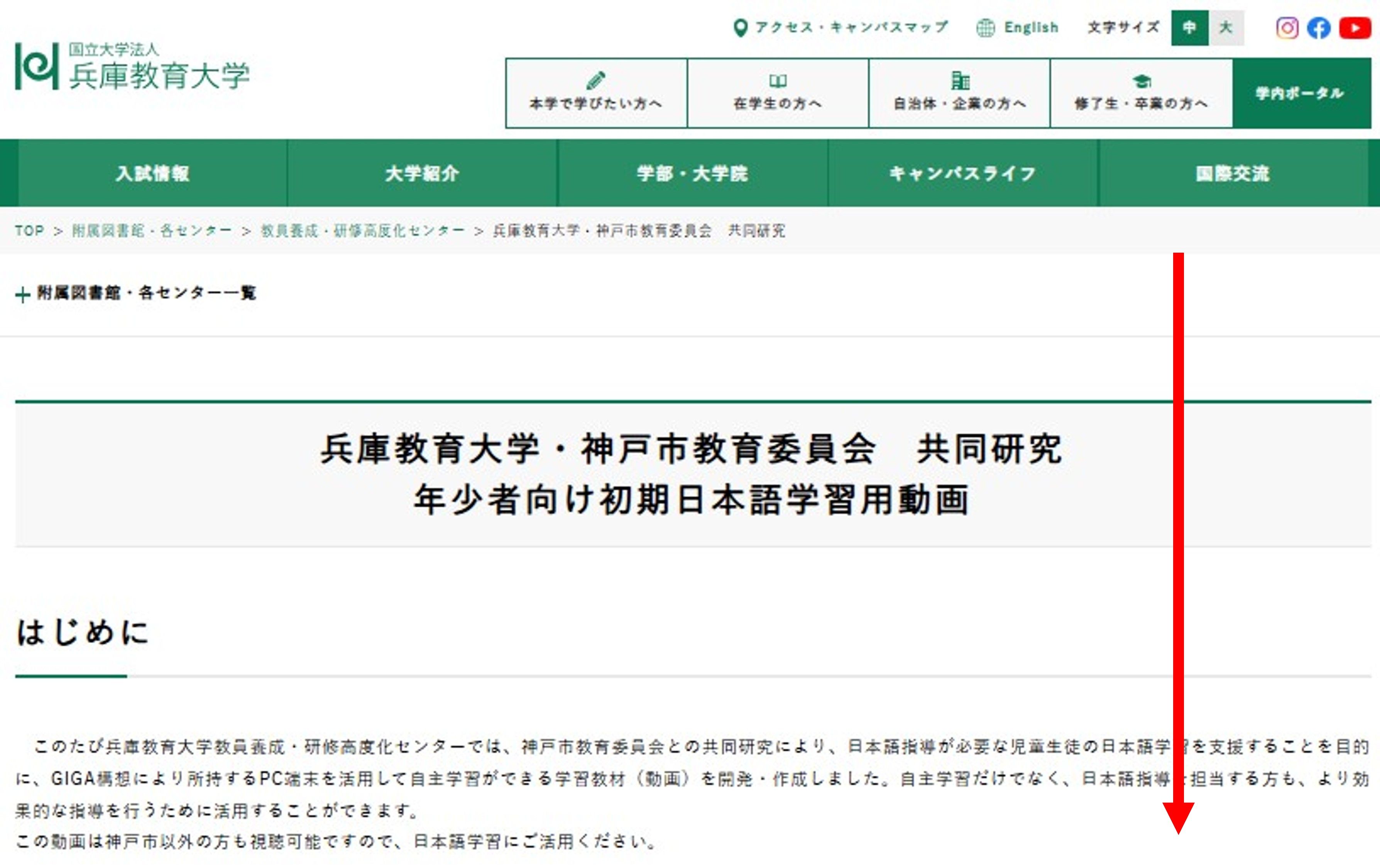
Scroll down the home page to find the Scenario Videos (シナリオ動画).
Scroll further down to find the Vocabulary Videos (語彙動画).
Scenario Videos (シナリオ動画)
Children can learn Japanese by watching an anime where Sapotan and Hirorin, who come from foreign backgrounds, experience school life at a Japanese elementary school.
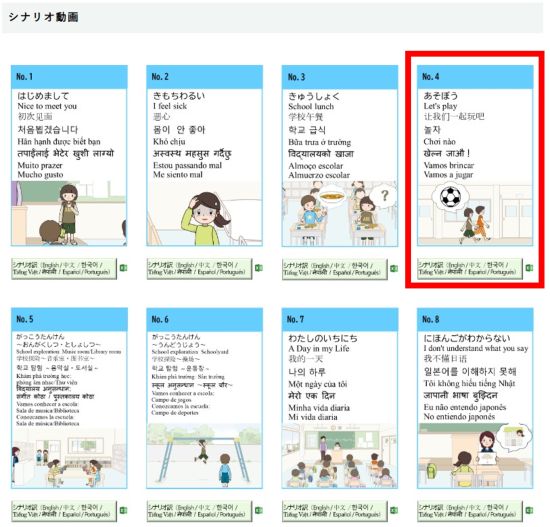
There are 24 Scenario Videos.Children can learn Japanese by watching them in order, starting with No. 1, or choose the ones they want to watch.
Take a look at No. 4, Let's Play.
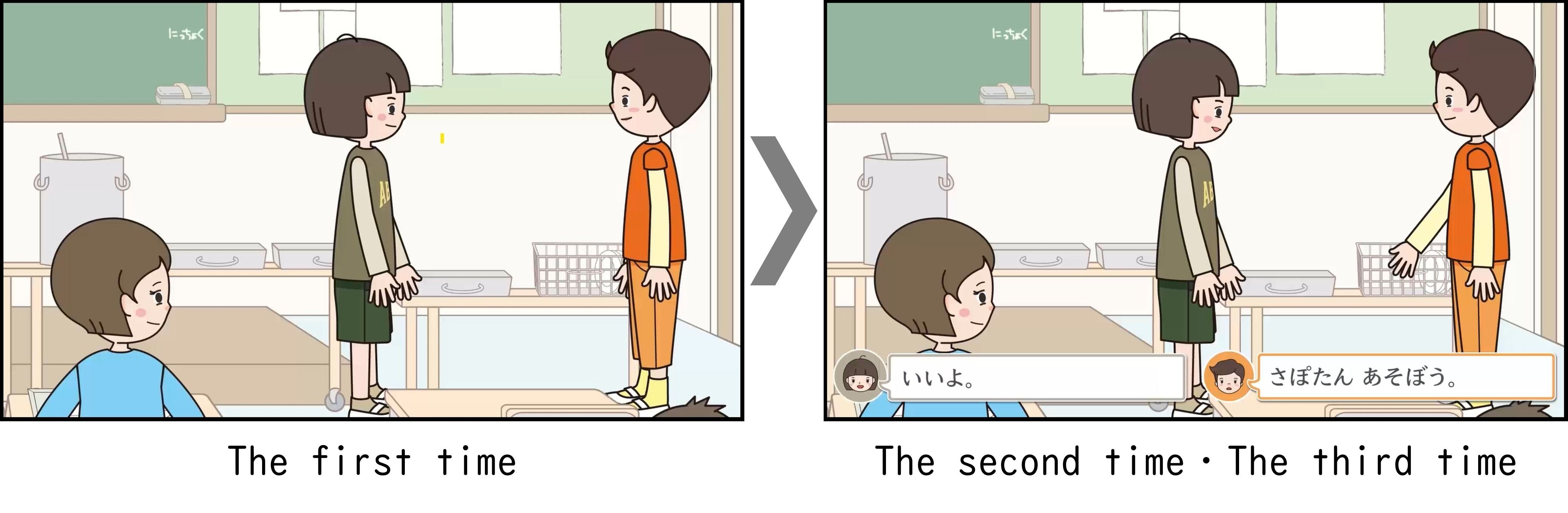
The scenes are only about one minute long.In each video, one scene is repeated four times.
Children can learn Japanese by listening to the conversation and reading the subtitles.
The first time a scene is shown, there are no subtitles.Children listen to the dialogue while watching the anime and try to figure out what's going on.
The second time, children listen to the dialogue while looking at the subtitles.
The third time, there is no sound.Children can practice reading by looking at the subtitles.
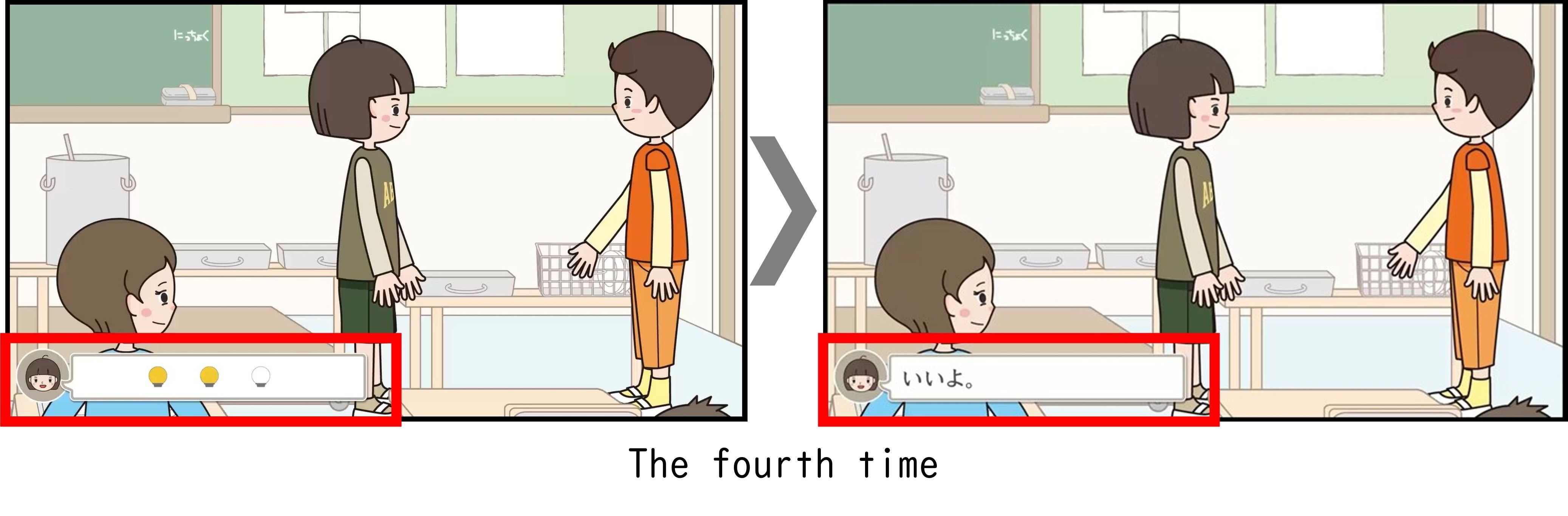
The fourth time, children can practice speaking by pretending to be Sapotan or Hirorin.The audio pauses before the most important expressions.When the sound stops, children have to think about what to say and try saying it.
While watching anime, children can enjoy learning Japanese even if they are alone.
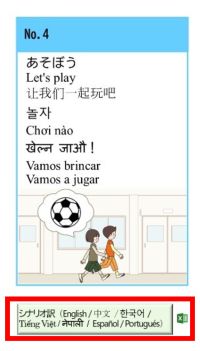
Excel files can be downloaded to see translations of the stories.
Available in English, Chinese (Simplified and Traditional), Korean, Vietnamese, Nepali, Portuguese, and Spanish.
Vocabulary Videos (語彙動画)
Children can learn basic nouns, verbs, and adjectives needed for school and everyday life in Japan.
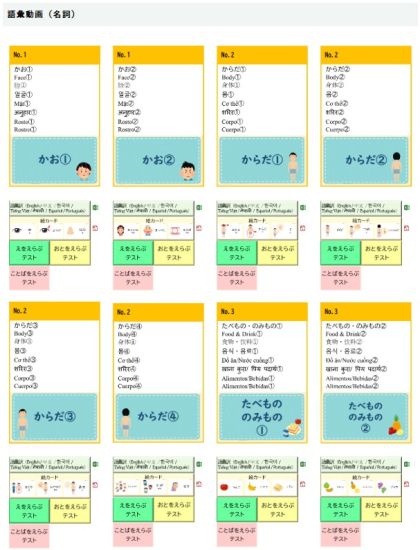
Nouns (24 categories)
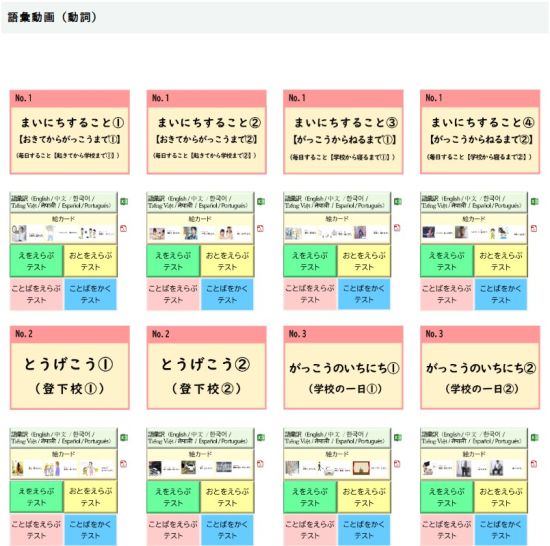
Verbs (19 categories)
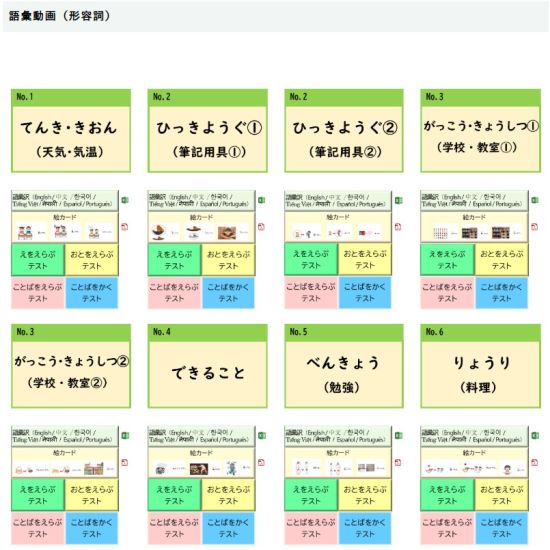
Adjectives (13 categories)
Each section comes with a video, a review test, a vocabulary list, and picture cards.
The vocabulary list is available in many languages.
Look at Noun No. 4, Exercise & Play(うんどう あそび) 1.
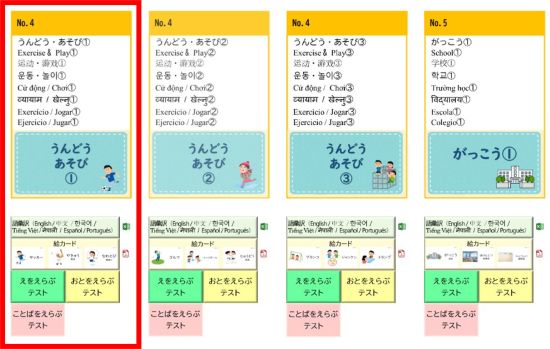
Click the title to watch the video or take the test.
First, watch the video.
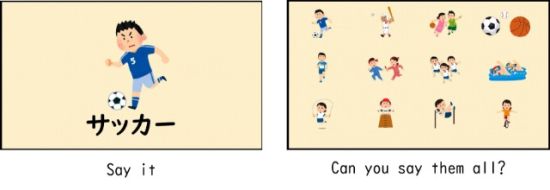
There are two parts: いってみよう(Say it) and ぜんぶいえるかな?(Can you say them all?)
In いってみよう(Say it), children look at pictures and learn words by listening to how they are said and written.
ぜんぶいえるかな?(Can you say them all?), children look at the pictures again and see if they can say each one.
Now let's look at the tests.They're called tests, but they're actually fun, like a quiz game.
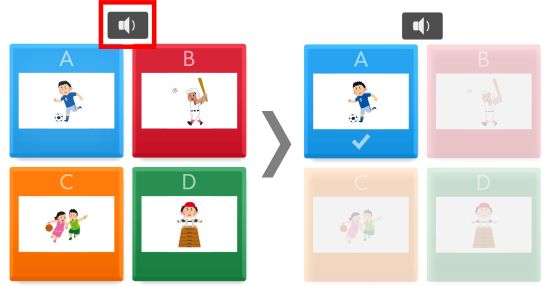
In えをえらぶテスト (Choose a picture test), children listen to the word and choose a picture.
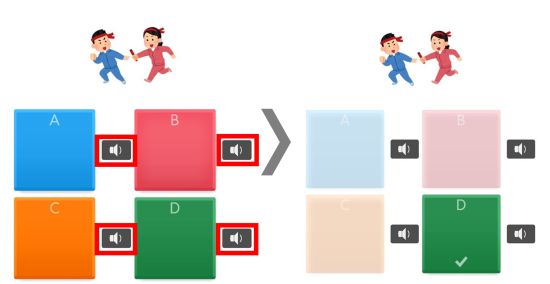
This is the おとをえらぶテスト(Choose the sound test).
First, press the audio button to hear the word.
Then choose the word that matches the picture.
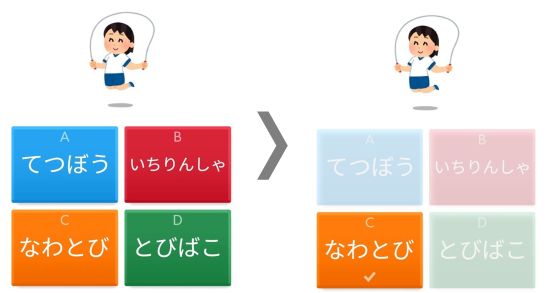
In the ことばをえらぶテスト(Choose the word test), children look at the picture and choose the word that goes with it.
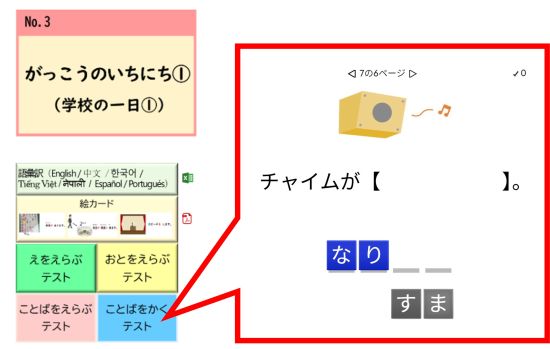
The ことばをかくテスト (Write the word test) is for verbs and adjectives.
Look at the picture and put the letters in the correct order.
Children can practice words again and again, in all different ways.
Children can take the えをえらぶテスト (Choose the picture test) and おとをえらぶテスト (Choose the sound test) by just listening, so even if they can't read yet, they can still learn words.
These videos can also be found on the YouTube Elementary Japanese for Children (Nihongo Gakushu Hiroba) channel.